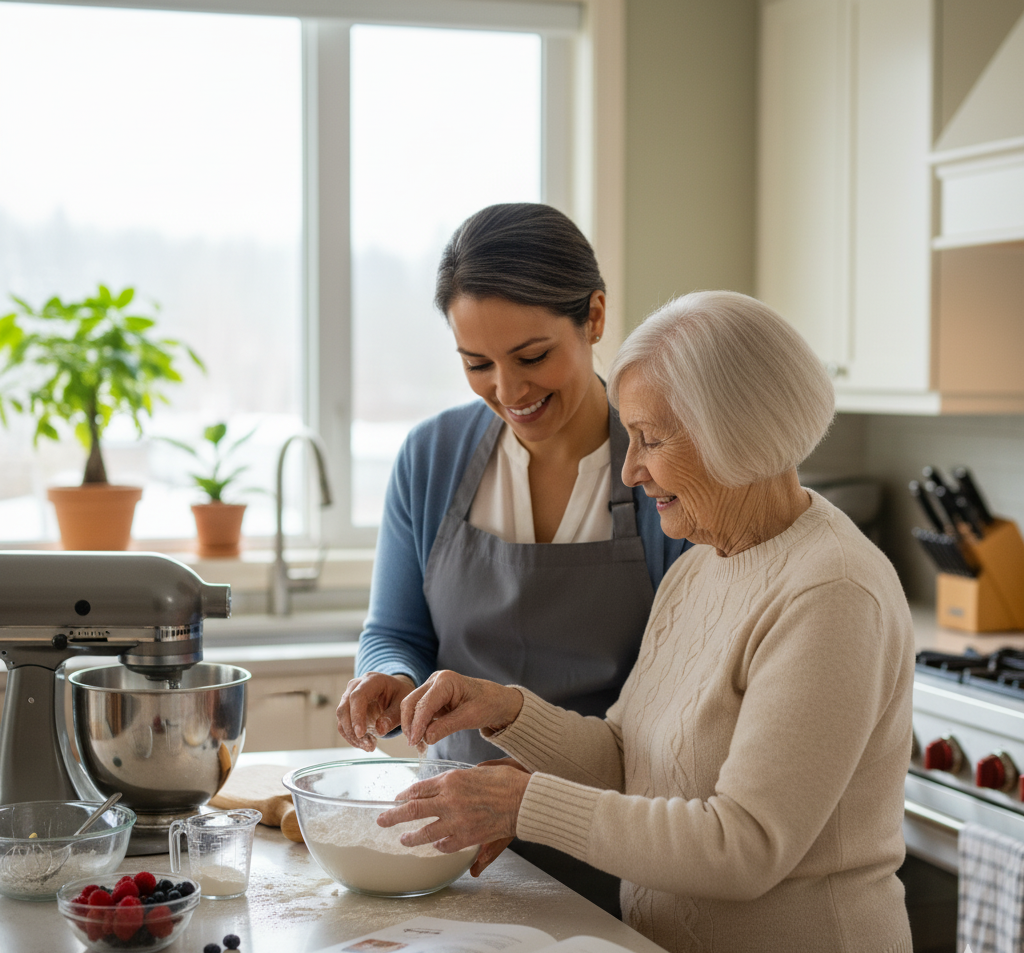
Cleaning, grocery shopping, cooking, helping with medical appointments, and managing medications are some of the main duties of a senior caregiver. In addition to these, caregivers often provide companionship, emotional support, and assistance with personal care tasks such as bathing, dressing, and grooming. They may also help with mobility, making sure seniors move safely around the home to prevent falls or injuries.
Responsibilities can change depending on your loved one’s health, age, and daily needs. For example, a caregiver may spend more time preparing healthy meals if nutrition is a concern, or focus more on medication management if a senior has multiple prescriptions. In many cases, caregivers also act as a trusted point of communication between families and healthcare providers. This helps ensure that seniors receive consistent, safe, and personalized care that makes daily life easier and more comfortable.
What is a caregiver?
A caregiver is someone who looks after the health and well-being of a person who needs help with daily tasks and activities. This could be because of age, illness, memory loss, or mobility issues. Caregivers give support with everyday needs while also offering comfort and companionship.
Long-term caregiving can be both rewarding and challenging. It’s important to think about your loved one’s condition as well as your own health when deciding what type of care is needed.
1. Assess medical needs
Caregivers often check on health conditions, help with appointments, watch for pain or changes, and manage medications. Regularly talking with doctors is very helpful.
2. Prepare a care plan
A clear care plan makes it easier to know what kind of support is needed each day. It also helps decide how many hours of care are required and if extra help is needed.
3. Assist with daily needs
Simple daily activities like eating, bathing, dressing, and toileting can become hard for seniors. Caregivers provide support to make sure these needs are met with dignity.
4. Provide companionship
Loneliness can affect seniors deeply. Spending time together, talking, or doing activities helps prevent isolation and builds a strong bond.
5. Help with housekeeping
Caregivers often help with dishes, laundry, vacuuming, and other household tasks. In some cases, they may also take care of yard work or simple maintenance.
6. Monitor medications
Many seniors take multiple medicines. Caregivers help by organizing pills, setting reminders, and ensuring the right doses are taken at the right time.
7. Review care plans regularly
Needs change over time. Caregivers must adjust the care plan often to make sure it matches the senior’s current health and situation.
8. Prepare meals
Cooking can be hard or unsafe for some seniors. Caregivers shop for groceries, prepare healthy meals, or find safe meal alternatives to ensure good nutrition.
9. Assist with mobility
Helping seniors move safely around the home or transfer from a bed to a chair reduces the risk of falls and injuries.
10. Provide transportation
Driving or using public transport may not be safe for seniors. Caregivers help by driving them to appointments, activities, or running errands.